
Same Ground, Different Time
Letters on the Road No. 32 - The Ancient Buddhist sites in Anuradhapura and Polonnaruwa — still in use after two thousand years, Central Sri Lanka

In the central part of Sri Lanka, Anuradhapura and Polonnaruwa were once two successive capitals of the ancient Sinhalese kingdom. They sit quite close to each other. Still, they don’t land the same when you actually move through them. Anuradhapura is active: large stupas, temples, pilgrims coming and going, bringing offerings, walking barefoot between temples. It doesn’t feel preserved. It feels used. On the other hand, Polonnaruwa shifts that: quieter, more space, more distance between things. It feels like a wide field of ruins where structures were simply left as they were, without much intervention.
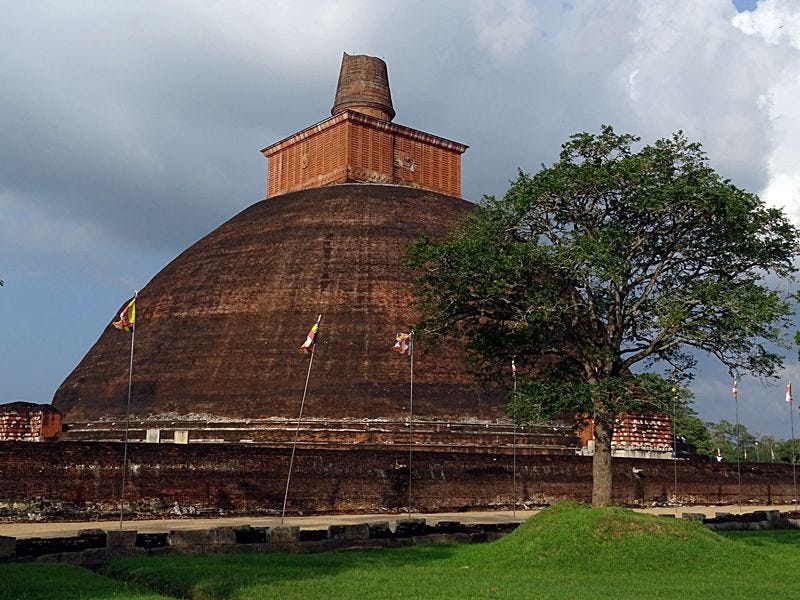
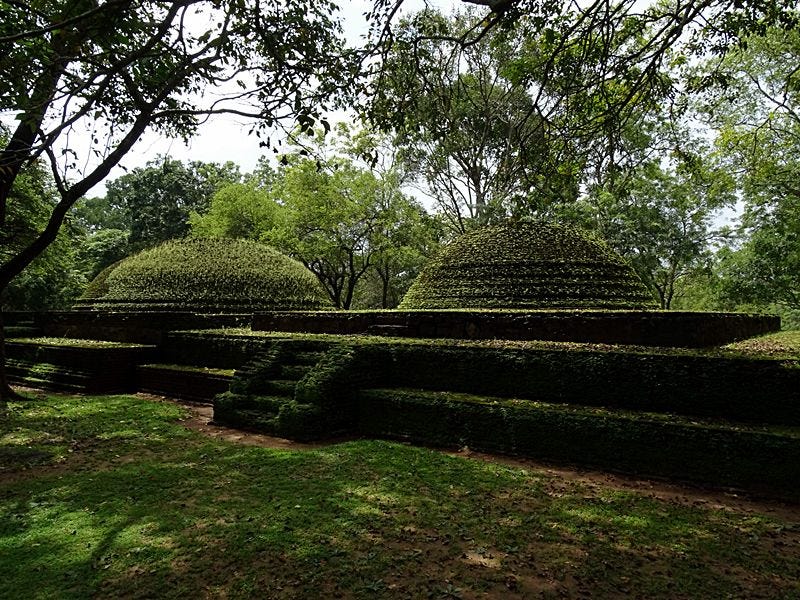
Moving through them (often by bicycle) the space doesn’t open all at once. You don’t “see” it immediately. It comes gradually. In Anuradhapura, you move from one large religious site to another, and you sense that everything is still in use. In Polonnaruwa, the ruins sit deeper in vegetation. Many of the smaller stupas are covered in a soft green layer of moss. Not restored, just left there. The rhythm is calm in both, but not the same. One feels lived-in. The other feels preserved. Still, there’s a kind of continuity running through both: the same thread - early Buddhist structures, just expressed differently.
I am moving mostly by bicycle, stopping often without planning to. I park the bicycle somewhere, walk toward a temple, take off my shoes before entering, then move slowly around the space. Sometimes I take photos, sometimes just wait for the light to shift and for the sun to come out of the clouds so the structures look different. I keep going round the stupas, sometimes alone, sometimes alongside other pilgrims who are doing the same, quietly, without interacting.
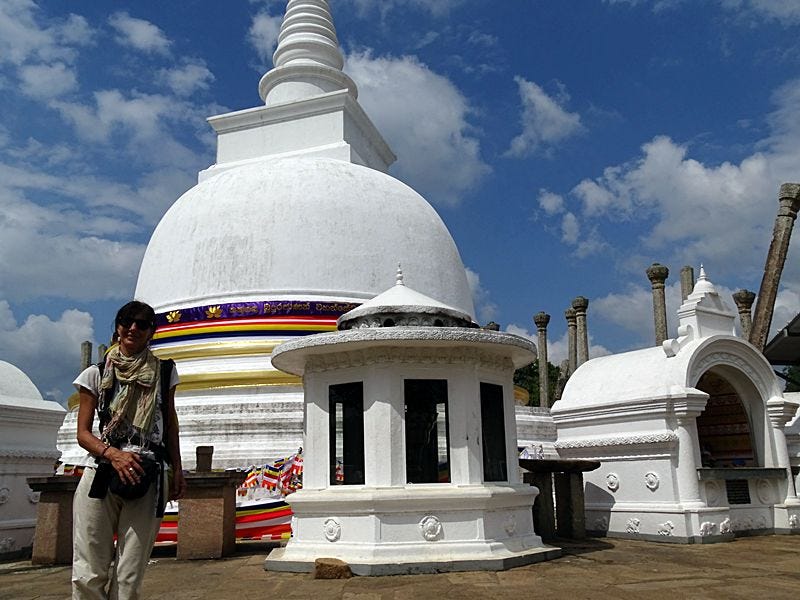
The ground is often very hot after being in the sun for a while, almost hard to step on barefoot, then suddenly it rains a little and everything cools down before the heat returns again. I have to stay aware of the monkeys, not leaving anything behind, always keeping things close. And in between all this, I stop and just admire: the stupas, the scale of them, the Buddha statues nearby. At some point, I lose track of direction, moving from one corner to another, as the sites keep opening into new spaces without a clear path.
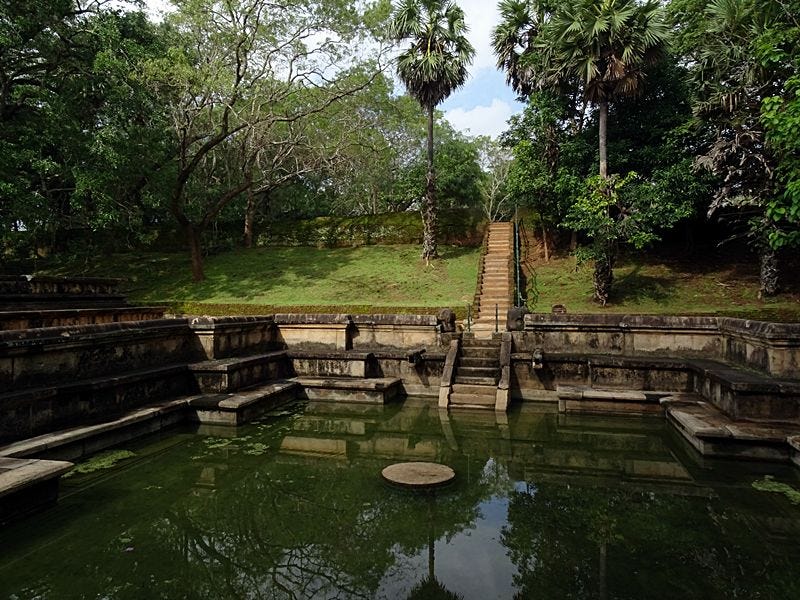
I’m not a religious person, and I haven’t come here for that. It’s more a curiosity: these places are on the UNESCO list, so I’ve thought there must be something to them. But being here, moving through Anuradhapura and Polonnaruwa, it’s different from what I’ve imagined. The stupas keep repeating, in different sizes and colors, over and over again, and at some point you stop comparing and just take them in.
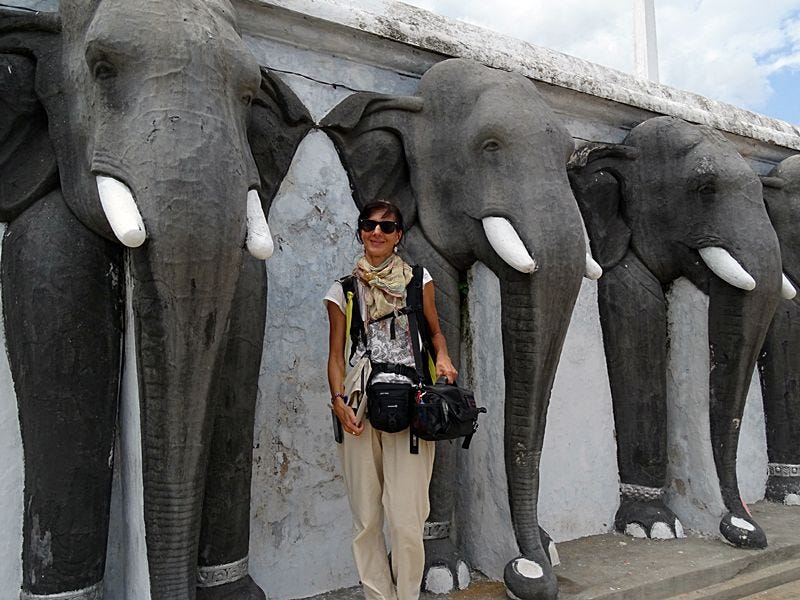
What stays with me is not only the architecture, but the fact that people are still coming here, still using these spaces after so many years. I haven’t known I could feel this so deeply. And it makes me see something simple: even if I don’t relate to religion, it doesn’t mean these places don’t carry something. There’s something here anyway. You feel it without needing to explain it.
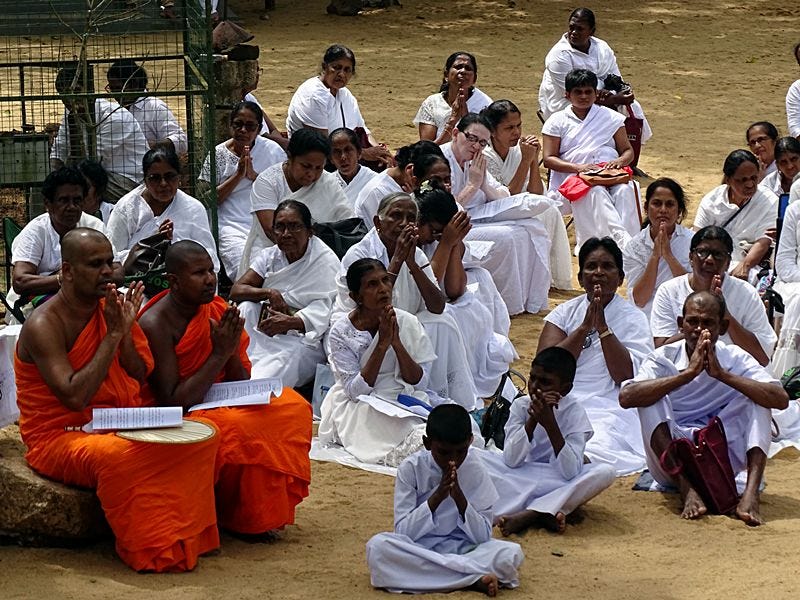
Being in such historical, religious, and cultural places makes you see cultural diversity differently. Religious traditions that have been lived for centuries, for thousands of years, are still present, still active, still passed on without interruption. And it’s not abstract: you feel their power, the depth, the energy they carry, even if you’re just passing through. It doesn’t matter that you don’t belong to it, because it still reaches and transforms you.
Being inside a certain type of field energy is enough, because the place and the people within it shape you in ways you don’t expect.


Very interesting - why did they decide to leave a part of the very old temples being taken by nature?!